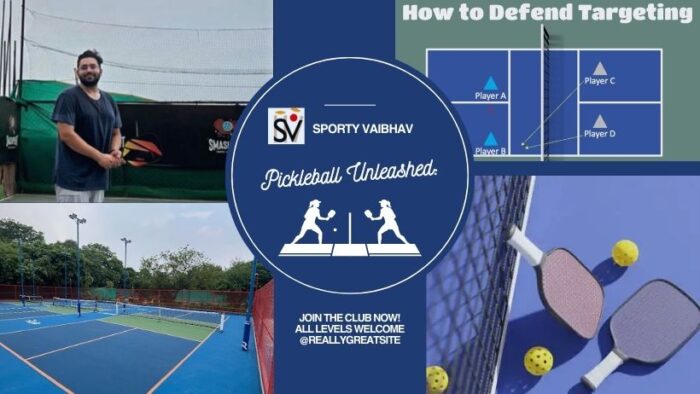
For decades, pickleball was the quiet secret of sun-drenched retirement communities, a gentle pastime played by folks who valued a good knee brace and an early bird special. It was the quintessential “grandpa sport”—leisurely, low-impact, and tucked away on repurposed tennis courts. But somewhere between the 2020 lockdowns and the rise of short-form video, the paddles changed hands. Suddenly, the game shed its orthopedic reputation and exploded into a neon-drenched, cross-generational phenomenon that’s currently colonizing every vacant parking lot and tennis club in the country.
This isn’t your ancestor’s afternoon shuffleboard. The new era of pickleball is defined by a frantic, high-energy “kitchen” culture and a demographic shift that has seen the average age of players plummet faster than a well-placed dink shot. From tech bros in Silicon Valley to collegiate athletes looking for a new fix, the sport has successfully rebranded itself as the ultimate social dopamine hit. It’s accessible enough for a beginner to feel like a pro in twenty minutes, yet addictive enough to turn casual weekenders into obsessive gear-heads with a closet full of graphite paddles.
The viral takeover of pickleball is more than just a trend; it’s a full-scale cultural pivot. It has managed to bridge the gap between Gen Z’s craving for “aesthetic” hobbies and the universal human need for face-to-face competition. While tennis can feel gatekept by country club etiquette and grueling physics, pickleball offers a chaotic, inclusive, and loud alternative that looks just as good on a TikTok feed as it feels on the court. The message to the old guard is clear: the seniors may have built the court, but the internet has officially taken it over.
Table of Contents
Pickleball’s Unexpected Rise from “Huh?” to “Hype
Not long ago, the mention of “pickleball” was almost guaranteed to elicit a confused squint or a joke about brine and jars. It was a fringe activity—an accidental invention born in 1965 from a rusty badminton court and a perforated plastic ball—that spent decades as a niche curiosity. For the uninitiated, the equipment looked like oversized ping-pong paddles and the rules felt like a fever dream of tennis and badminton. It was the underdog of the sports world, a “Huh?”-inducing hobby that existed primarily in the peripheries of PE classes and retirement village cul-de-sacs.
Then came the Great Pivot. Driven by a global craving for low-barrier social connection, the sport’s “hype” era exploded with the force of a perfectly executed overhead smash. By 2026, the data tells a staggering story: participation has surged by over 300% in the last few years alone, with nearly 25 million Americans now identifying as regular players. The “Huh?” has been replaced by a deafening “Whack!” as professional leagues like the World Pickleball League and Major League Pickleball sign massive TV deals with ESPN and CBS, fueled by investments from icons like LeBron James, Tom Brady, and Andre Agassi.
The secret sauce of this meteoric rise is the sport’s uncanny ability to kill the ego. Unlike tennis, which can take months to even sustain a rally, pickleball offers instant gratification; you can go from a total novice to a competitive “dinker” in a single afternoon. This accessibility has triggered a massive demographic shift, with the 25–34 age group now officially the largest segment of the player base. From “eatertainment” venues like Chicken N Pickle to high-stakes celebrity pro-ams, pickleball has successfully rebranded itself as the ultimate “hype” lifestyle—one where the barrier to entry is low, but the obsession is absolute.
Why a Sport Loved by Seniors Became Gen Z’s New Obsession
For a generation raised on the lightning-fast feedback loops of TikTok and Instagram, pickleball’s appeal lies in its instant gratification. Unlike tennis, which requires years of grueling lessons just to keep the ball in play, pickleball has a learning curve that is essentially a flat line. A Gen Z newcomer can pick up a paddle for the first time and be engaged in a competitive, dopamine-inducing rally within fifteen minutes. In a world of high-entry-barrier hobbies, pickleball is the “plug-and-play” version of athletics—low stakes, high reward, and perfectly suited for a demographic that prizes efficiency and immediate results.
Beyond the mechanics, the sport has tapped into the “Third Place” vacuum. As traditional nightlife and expensive clubbing lose their luster, Gen Z is flocking to activities that prioritize low-pressure socializing. Pickleball is inherently loud, cramped, and collaborative; the small court size means you’re always within whispering (or shouting) distance of your friends. It’s the athletic equivalent of a coffee shop—a place to hang out, wear a coordinated “court-core” outfit, and film a few highlights for the ‘gram, all while burning off the stress of a 9-to-5. It’s not just a game; it’s a lifestyle aesthetic that looks as good in a grid post as it feels on the court.
Finally, there is a certain “post-ironic” charm in adopting a sport previously reserved for the AARP crowd. Gen Z has a knack for reclaiming the uncool—from dad shoes to vinyl records—and turning it into a cultural powerhouse. By embracing a game with a name like “pickleball,” they’ve leaned into a whimsical, non-intimidating vibe that stands in stark contrast to the stuffy, high-performance elitism of traditional country club sports. It turns out that the seniors were onto something all along: a sport doesn’t have to be grueling to be Great; it just has to be fun enough to make you forget you’re actually exercising.
The Perfect Mashup: Tennis + Badminton + Ping Pong = Chaos
Pickleball is the ultimate athletic “remix,” a Frankenstein’s monster of racket sports that somehow manages to be greater than the sum of its parts. It borrows the court dimensions and net height of badminton, the groundstrokes and scoring spirit of tennis, and the quick-fire reflexes and paddle texture of ping-pong. This “triple threat” DNA creates a unique physical paradox: you’re moving across a space small enough for a conversation, yet swinging with the intent of a grand slam champion. It’s a hybrid that shouldn’t work on paper, but in practice, it feels like playing a giant version of table tennis while standing on the table.
The real magic—and the source of the sport’s signature chaos—is how these styles clash during a single point. A rally might begin with the long, graceful baseline drives of tennis, only to instantly devolve into a “firefight” at the net that mirrors the frantic, twitchy speed of a professional ping-pong match. Because the court is only $20 \times 44$ feet, the reaction time required is significantly lower than in tennis. This compressed space forces players into a high-speed game of chess where a soft, delicate “dink” (the badminton influence) is just as deadly as a 60 mph “smash.”
This mechanical mashup creates a tactical environment where power is frequently neutralized by placement. The inclusion of the “Non-Volley Zone” (affectionately known as the Kitchen) prevents players from simply camping at the net and slamming the ball down their opponent’s throat. This rule forces a sophisticated game of cat-and-mouse, where players must balance the aggression of tennis with the finesse of badminton. The result is a sport that is deceptively strategic, occasionally hilarious, and perpetually chaotic—a perfect storm of physics that ensures no two points ever feel the same.
The Gear That Makes Pickleball Look Cool Without Trying
The aesthetic of pickleball has undergone a radical glow-up, trading in the orthopedic-white Velcro sneakers of yesteryear for a sleek, high-performance street style. Central to this transformation is the paddle itself—no longer just a wooden slab, but a canvas for minimalist design and aerospace-grade technology. Brands are leaning into “court-core” visuals, utilizing matte finishes, pastel gradients, and bold typography that wouldn’t look out of place in a boutique surf shop. This shift has turned the paddle from a mere tool into a genuine fashion accessory, allowing players to signal their personal brand before they even hit their first serve.
Then there’s the apparel, which has successfully bridged the gap between high-fashion “athleisure” and functional sportswear. Gen Z and Millennial players have ditched the stiff, pleated whites of traditional tennis for retro-inspired silhouettes—think 70s-style track shorts, oversized graphic tees, and neon-accented headbands. The goal is “effortless athletic,” a look that says you could be heading to a high-stakes tournament or a low-key brunch. By incorporating breathable, high-tech fabrics into vintage cuts, the sport has carved out a visual identity that feels both nostalgic and cutting-edge, making the “pickleball fit” a viral category in its own right.
Even the accessories have leveled up, proving that the sport’s cool factor is in the details. From designer sling bags specifically contoured for paddles to “aesthetic” water bottles and coordinated grip tapes, the gear ecosystem is built for the “unboxing” era. It’s a low-friction entry into the world of sports gear—you don’t need a massive equipment bag or a trunk full of rackets. A single, well-designed paddle and a pair of retro court shoes are all it takes to look like a seasoned pro. Pickleball has mastered the art of looking cool by not taking itself too seriously, proving that you can be a serious competitor while still looking like you’re ready for a photoshoot.
Learn It in 10 Minutes, Flex It Forever
The “10-minute” learning curve is pickleball’s greatest marketing weapon. While a tennis serve can take months of biomechanical frustration to master, the underhand pickleball serve is as intuitive as tossing a set of keys. By the end of a single ten-minute orientation, most players have already grasped the “double bounce” rule and the boundaries of the Kitchen. This low barrier to entry transforms the court from a place of athletic intimidation into a playground of immediate competence. You don’t “suck” at pickleball for long; the sport is engineered to get you to a state of flow faster than almost any other competitive activity.
However, once you’ve learned the basics, the “forever flex” begins. There is a vast, rewarding chasm between a casual dinker and a high-level strategist. In 2026, the sport has matured into a game of extreme precision where “flexing” isn’t about raw power, but about unshakeable consistency and a zen-like mastery of the dink. Advanced players don’t win by smashing the ball; they win by boring their opponents into a mistake. This depth ensures that the game remains addictive long after the novelty wears off, offering a lifelong ladder of skill ratings (DUPR) and tournament brackets that provide a constant sense of progression.
The “flex” also extends far beyond the scoreboard and into the realm of social currency. In today’s culture, being “good at pickleball” has become a versatile personality trait that works in corporate networking, local community circles, and digital feeds. Whether you’re showing off a highlight-reel “Erne” on TikTok or casually dominating an open-play rotation at a local park, the sport provides a consistent platform for social ego-boosting. It’s a rare hybrid: a game easy enough to invite your boss to play, yet technical enough to prove you’re the most coordinated person on the court.
Small Court, Big Drama — Inside the Action
The atmosphere in a small-court setting is less like a stadium and more like a pressure cooker. With the fans close enough to hear the players’ heavy breathing and the squeak of sneakers echoing off the walls, every play feels amplified. There is no distance to hide behind; the intimacy of the space turns every crossover, block, and contested shot into a personal showdown. In this environment, the “big drama” isn’t just about the score—it’s about the raw, unfiltered intensity of athletes competing in a space where every glare and word of trash talk is felt by everyone in the room.
The stakes on a small court often transcend professional rankings, tapping into the heart of community pride and personal legacy. Whether it’s a neighborhood blacktop or a high school gym, these venues are where reputations are forged and broken. The drama stems from the “nothing to lose” mentality of the underdog and the desperate grit of the favorite trying to hold their ground. In these tight quarters, a single three-pointer or a last-second steal doesn’t just change the game; it ignites the crowd into a localized frenzy that larger arenas simply cannot replicate.

Ultimately, the magic of small-court action lies in its authenticity. Without the distracting light shows or massive Jumbotrons of professional leagues, the focus remains entirely on the soul of the game. It is a theater of human emotion where you can see the sweat, the frustration, and the pure joy of a win from just a few feet away. This is where basketball is stripped down to its most kinetic form, proving that you don’t need twenty thousand seats to host a spectacle that stays with you long after the final buzzer sounds.
How Pickleball Turned into a Viral Content Machine
Pickleball’s meteoric rise as a viral content powerhouse is largely due to its “low barrier to entry, high visual reward” nature. Unlike sports that require years of technical mastery to look competent, pickleball allows beginners to engage in long, rhythmic rallies almost immediately. This accessibility makes for perfect short-form video content; the satisfying pop of the paddle and the frantic, close-quarters hand battles at “the kitchen” create a natural ASMR quality that stops the thumb mid-scroll. On platforms like TikTok and Instagram, these rapid-fire exchanges translate into high-energy clips that feel relatable yet impressive, turning everyday recreational play into snackable digital entertainment.
The sport has also benefited from a unique “clash of cultures” that generates endless social commentary and engagement. Content creators have struck gold by highlighting the comedic tension between the established tennis community and the surging pickleball crowd, or the irony of a sport once associated with retirees becoming the trendy obsession of Gen Z. This tribalism provides a constant stream of “point-of-view” (POV) skits, memeable court-side fashion, and heated debates over court space. By leaning into these social dynamics, influencers have transformed pickleball from a simple backyard game into a lifestyle brand that people love to talk about—and argue over—online.
Finally, the professionalization of the sport has introduced a high-stakes “highlight reel” culture that mirrors the NBA or ATP. As pro leagues have grown, so has the quality of cinematic slow-motion captures, “behind-the-back” trick shots, and raw emotional outbursts from top-tier players. These professional clips serve as the aspirational peak of the content pyramid, encouraging amateur players to record their own matches in hopes of capturing a “viral moment.” This cycle of creator-driven content—from professional highlights to hilarious amateur fails—has created a self-sustaining ecosystem that keeps pickleball trending across global feeds.
Discover more from Sporty Vaibhav
Subscribe to get the latest posts sent to your email.

